
Week 16: Interaction

Interaction is an important component of any training program.

  1. A separate complete/whole session can be ear marked for interaction.
  2. Part of the session’s time may be carved out for interaction.

Timing

  1. At the end of the session.
  2. At the end of the day’s training.
  3. Soon after lunch.

Some of the facilitation techniques are used in the Interaction session. The following steps may be followed for better results:

  1. Identify the topic for discussion and inform the trainees.
    Example:
    Whether Mediator can give proposals?
    Whether re-framing can be done in Joint session?
  1. Ask each member to contribute his/her opinion with one reason/ point of justification.
  2. Depending on the availability of time give a minute or two to each.
  3. Keep a timer and follow the clock strictly.
  4. List all the ideas on the white board/black board/flip chart.
  5. Segregation technique: Where two opinions are possible, list down one set of ideas on one part and the other set of opposing ideas on the other part of the flip chart/black board /white board.

Ground Rules to be laid down before commencing the session

  1. All opinions/view-points/justifications/reasons are to be respectfully received.
  2. Trainees are free to disagree with each other gracefully.
  3. Trainees do not interrupt with each other.
  4. When a trainee gives his/her viewpoint, the others can agree or disagree but cannot enter into conversation/discussion between/amongst themselves.  

Consensus technique 

Facilitator/Trainer Draws conclusion from the pooled ideas.

Example:

For a, b, c reasons many of you (can mention numbers) strongly feel that a mediator can give proposals. 

May I request those who disagree to raise their hands please?

Facilitator can mention the numbers

For l, m, n reasons some of you strongly feel that a mediator cannot give proposals.

May I request those who disagree to raise their hands please?

Facilitator can mention the numbers

Focus only on Facilitation

In some situations, consensus may be reached. In some situations, consensus may not be reached.

Trainer should not drive or force the participants to reach to a conclusion/consensus.

Trainer’s Preparation

  1. Trainer must have 10-15 topics identified for interaction in the trainer’s kit.
  2. Trainer has to identify a topic for discussion. Then, trainer can open the discussion with three-four broader questions for consideration which will enable the participants to work within the frame.

Round Robin Technique

  1. Trainer/facilitator opens the topic. Gives a very short but meaningful opening remarks. Invites the attention of the participants to the goal of the session. Gives them 5 -10 minutes time to think and to identify their opinions/ideas/view-points.
  2. Trainer/facilitator goes round the table from one trainee to the other and collects “one idea from one person”, and sees to it that all the trainees have shared their ideas.
    It is advisable that the trainer goes and stands in front of each of the participants while collecting their inputs, and demonstrates active listening.
    This makes every trainee feel that he/she is not ignored and everyone’s view-points are received.    
  3. In addition, Trainer must have prepared a list of closed-ended questions to be asked to the participants to navigate the facilitation.
  4. Should not forget to lay down the ground rules.

Benefits of Interaction Session using the Facilitation Technique

  1. Helps the trainer to build rapport with the participants.
  2. Helps the trainer to know the level of comprehension of the trainees.
  3. Helps the trainer to make the participants inculcate the capacity of giving their view-points in a line or two, within a minute or two.
  4. Helps the trainer to train the participants to build the capacity of listening.

(All copy rights reserved by the author S.Susheela)  

Week 15: Re-cap and K.L.P.

Recap is an essential part of any training program. As training in mediation is given to adults, re-cap is helpful in enhancing their capacity of retention. Retention is the capacity of an individual to retain the information he/she has received. An adult retains the information (i) if it is important to him/her (ii) if it is repeated often.   

RE-CAP IN FORTY HOURS’ TRAINING IN MEDIATION:

When is Re-cap done?

This is done at the beginning of the next day’s training.

Who does the re-cap?

It is ideal that a lead trainer takes the re-cap session. However any other trainer who had been present throughout the previous sessions can also do.

What are the components of re-cap?

  1. MENTIONING ABOUT THE TOPICS AND SUBTOPICS
    While doing re-cap a trainer has to mention all the topics and sub-topics covered on Day-1, Day-2 etc. in the same order in which they were dealt with.
  1. K.L.P.: KEY LEARNING POINT
    While mentioning about the topic and sub-topic, one or two key learning points of each topic and sub-topic must necessarily be reiterated.
    If any sub-topic, which ought to have been covered by a trainer has been left uncovered, the same requires to be touched upon while giving K.L.P
  1. PREPARATION BY THE TRAINER
    1. It is ideal for a trainer to ask this question: “What and how do I tell about this topic /sub-topic in one or two sentences so that the trainees do not forget these Key Learning Points?”
    2. Trainer must bring the gist of the topic/sub-topic in one or two sentences. Trainer has to formulate the sentences well in advance.

Techniques used by the Trainer

  1. Questioning
    Asking closed ended specific questions.

Example:

1. What was the very first topic we dealt with on the first day?

2. What are challenges faced by an adult learner  (i)…(ii)…..

  1. Inviting Participation
    The trainer involves the participation of everyone in the group, by pointing questions to each of them.
  1. Content management technique  
    Clarity, brevity and continuity are never ignored.
    (For inputs on this refer to blog post 1).

Impact of Re-cap and K.L.P.

  1. It enables the trainees to retain the information given during the training.
  2. Trainees understand the necessity of positive and negative reinforcement.
  3. Trainees appreciate the caliber of the trainer in giving the essence of hours’ and days’ of teaching /training within minutes.

How does re-cap and K.L.P. help the Trainer?

  1. While inviting answers to questions about the topics /sub-topics dealt with by the trainers, trainer will know how many in the group can retain the information. Based on the inputs, further sessions can be re-structured and repetition of K.L.P.s during the session may be incorporated as part of training.
  2. Pace of training can be re worked.
  3. Extent of information to be given can be moderated

How long should a Re-cap or K.L.P. session go?

15 minutes would be the ideal time.

But where some sub-topics forming part of curriculum have to be dealt with for having not been covered, additional 15 minutes’ time may be taken. However, this should not be cultivated as a habit.

If the trainer takes additional 15 minutes time to cover the sub-topics related to second day’s topic on the third day, caution should be taken not to repeat the mistake of leaving some sub-topics uncovered on the fourth day hoping to be covered during the KLP session on the fifth day.

In some training programs all the trainees may not be present on time. In some places on the first and second day of training, the trainees may not even consider punctuality as a serious requisite. The trainer handling the KLP session should begin the session on time irrespective of the number of trainees that are present, but continue with the same KLP session till all the trainees assemble.

Thus, KLP session gives an indication to the trainees that trainers are serious about maintaining discipline regarding time.

The trainer will not let it be made known to the trainees that he/she was waiting for all the trainees to come in order to begin a new topic.  

Required Strengths of a Trainer

(i) RETENTION CAPACITY (ii) CONFIDENCE (iii) COMMAND OVER CONTENT KNOWLEDGE.

  1. A Trainer doing the re-cap and KLP should be very confident and should have excellent retention capacity. Trainer should not depend upon any notes, slides etc in the KLP session.
  2. Thoughts should flow one after the other.
  3. There should be a continuous thread without any break.
  4. KLP session should cover the KLPs of all the previous days. 

Example

On the fifth day, trainer has to commence the KLP session from the  first day’s topics /sub-topics and move on to the  topics and sub-topics covered on  the subsequent 3-days.

How to excel in giving K.L.P.s?

  1. Each trainer should take notes /point down key words/key points referred to by other trainer/s in all the sessions.
  2. Write the gist of each session choosing 2-4 key points.
  3. Select 2 points out of 4.
  4. Rehearse
  5. Can make a note of entire re-cap- KLP session (Verbatim) for personal use.
  6. On each topic/sub-topic at least 10 single liners are to be kept ready. So that what is said in the KLP session on the second day need not be repeated on the third day.
  7. At the end of every day’s training session, each trainer should try to do a KLP session in the presence of co trainers and get their feed back.
  8. Irrespective of whoever is going to do the Re-cap and KLP session, every trainer has to be prepared to do it.

AN EXAMPLE OF THE INCORRECT METHOD OF HANDLING RE-CAP & KLP SESSION

The lead trainer handling the session asked each of the trainees one after the other what were the topics covered on the first day, second day etc.

Each one mentioned the topics/sub-topics dealt with. 

Some of them said it by memory, some looked into their notes, some took help from the training curriculum.

Trainer concluded the session thanking all of them for their active participation and requested the co-trainer to proceed with the day’s new topic.

Remember:

 Re-cap is not just remembering the title of the topic/s or sub-topic/s.


 (All Copyrights reserved by the Author S.Susheela)

Week 14: “WHERE ARE YOU AND WHAT ARE YOU DOING?”

A trainer may be invited to give a lecture on a given topic, give awareness about mediation to a chosen audience, address the referral judges, be part of forty hours’ training program in mediation, refresher course, advanced course etc. as a faculty. Each role is different. The preparation required to effectively perform each role is different. In each of the aforesaid programs, the role assigned to an individual trainer may be different. Trainer should not adapt the method adapted in one area of training to the other unless its adaptability is tested and found suitable and useful.

A trainer may be asked to facilitate a discussion or do pre-briefing or de-briefing, or participate in a role play as a party, or may be requested to observe the trainees while they are doing role plays and correct them, note down the mistakes committed by them etc. There are several roles a trainer may have to play. It is ideal to note down each of these, and make a list of dos and don’ts in each of the categories and have neat plan/s chalked out for every situation. Trainer’s kit must have multiple plans for each situation.

Awareness Program

When a trainer is invited to give awareness on mediation the following are to be considered:

  1. UNDERSTANDING THE BACKGROUND OF THE AUDIENCE:
    • Who are the audience?
    • What do they know about Mediation?
    • What do they not know?
  2. CONTENT PREPARATION
    • What do I want them to understand?
    • What do I give them?
    • How do I make them understand the importance of Mediation?
    • How do I make them embrace Mediation as an effective ADR?
    • (Most important question) How will they get benefited by my presentation?
  3. PRESENTATION:
    • How do I begin?
    • How do I conclude?
    • How do I tell the essence of mediation in the available time?
    • What story am I going to tell (in how many minutes)?
    • Do I have a personal story to share with them?
    • What examples am I going to give them?
    • Framing questions: What questions do I pose which should also be the questions of many in the audience?
    • What answers am I going to give them?
    • What is that one strong strategic question which would make them move towards Mediation?
  4. CONNECTING TO THE AUDIENCE:
    • Move from known to the unknown.
    • Use the language known to them.
    • Use stories/ examples/case histories.

At the end of each of these highlight the core message which should strike the audience.

Strengthening Factors

I. Statistics

II. Logic

III. Emotion

IV. Ethics – credibility

Components of an Awareness Program

  1. Introduction
  2. Illustration
  3. Inspiration

Introduce, Illustrate, Inspire and you are sure to ROCK!!!


(All Copy rights are reserved by the author S.Susheela)

Week 13: Moving on the Track

Moving on the track is considered as one of the ‘leading techniques’ of a trainer. It is also considered as a strengthening technique. When a trainer chooses a particular topic for presentation, anything that he/she speaks should relate or should have relevance to that topic. Nothing unconnected to the topic should be presented. Often, we see some trainers beginning with a topic moving on to several other topics and ending with an altogether different topic. Trainer has to learn to work within the boundaries.

Some questions that would help in mastering this technique is to ask the following questions while preparing for the presentation:

Stage 1:

How do I begin?

What do I tell next, next, next?

What question should I ask to open a topic or sub-topic?

Which example am I going to give and where? 

Which exercise am I going to introduce and when?

Which story am I going to tell and when?

What question/s am I going to ask? To whom?

How do I summarize?

How am I going to conclude?  

Stage 2:

Are there chances of misunderstanding the examples given by me?

Is the exercise appropriate? Will the trainees be able to complete it on time?

How short can I make this case study/case history?

What is the key message I want to convey in a single line at the end of each story/exercise/example?

Stage 3:

If the trainees are unable to understand a given example, exercise what other example/exercise can I give?

What would be the probable questions from the audience?

Trainer should have a clear understanding of the topic in general and specific sub topics.  As training transmits a blend of theoretical and practical knowledge, trainer has to think many a times before explaining a concept. He/she should be very clear as to why a given example is used to make a given concept clear. An inappropriate example, case history, story would give a clear indication to the trainees that the trainer is not moving on the right track.


Example:

DEFINING THE TRACK

Topic: Conflict

  1. What is conflict – What is not conflict?
  2. Difference between fight, dispute and conflict; Examples
  3. How does a conflict arise?
  4. Source, Cause, Types of conflict; examples
  5. Different styles of conflict. Examples coupled with questions, asking the trainees to identify the style. Eliciting examples from the trainees in advanced mediation training programs, on different styles.
  6. Difference between managing conflict and resolution of conflict.
  7. Techniques to resolve the conflict – Identify a specific technique and explain how that technique can be used. Give 3-liner exercise and ask the trainees to resolve the conflict using the technique introduced.
  8. Techniques adapted by individuals to manage the conflict.

Question for discussion:

  1. Should mediator resolve the conflict?
  2. Is it necessary to address the conflict in all disputes?

SOME ‘OFF THE TRACK’ MOVEMENTS NOTICED BY THE TRAINEES:

  1. A trainer was telling conflict is an emotion, at times he said  it is a feeling and many other terminologies not understood by the trainer were used to explain what conflict is. 
    Conclusion by Trainees:
    Trainer does not know the distinction between emotion, feeling, and situation.  Trainer does not know what is conflict.
  2. A very lengthy case history is given, with all unwanted details, introducing many characters in the story.
    Conclusion by trainees:
    They lost interest in the details, could not remember who is who out of ten characters introduced and hence, they moved away from the track, while the trainer was struck with his story and staying on the track.  
    This mistake is known as “SITTING ON THE TRACK”.  Some trainers get struck at one point and keep on revolving around that point without moving forward and do not cover the other aspects to be covered during their presentation.  
  3. Example had nothing to do with the topic of conflict.
  4. Trainer did not know the difference between managing conflict and resolving conflict.
  5. No techniques were suggested as to how a conflict is to be resolved.
  6. Did not know the distinction between avoidance and denial  and between avoiding and ignoring.

HOW DO WE TRAIN OURSELVES TO MOVE ONLY ON THE TRACK?

  1. Define the track CAREFULLY.
  2. Remove all obstacles.
  3. Make effective use of the “delete key”.
  4. Never hesitate to change the course and get back on the right track.

(All copy rights reserved by the author S. Susheela)

Week 12: Indiscriminate use of Slides

Focus is the art of knowing what to ignore.

James Clear

Now a days it is very rare to see any training related to mediation without using power point.

Many potential trainers ask this question: “Should we compulsorily use power point presentation in order to be best trainers?  The answer is a clear “NO”.

Some others ask this question – “What is wrong in using Power point Presentation?” The answer is “NOTHING WRONG”.

However, the following guidelines may be considered while using power point presentation:

  1. Slides should be complementary to what the trainer is communicating orally.
  2. The slides should be prepared in such a manner that trainees should not be focusing only on the slides, completely ignoring what the trainer is speaking.
  3. It is better to use only one or two key points or one or two key words on one slide.
  4. Slide should not be over crowded.
  5. Slide should not be filled like a newspaper.
  6. Slides can be used in the following circumstances:
    • While introducing some technical words, which the trainees may be hearing for the first time. Ex. BATNA – BEST ALTERNATIVE TO NEGOTIATED AGREEMENT”; “REACTIVE DEVALUATION”    
    • Slides can also be used to show some pictures.
    • Slides can be used to give clear instructions:

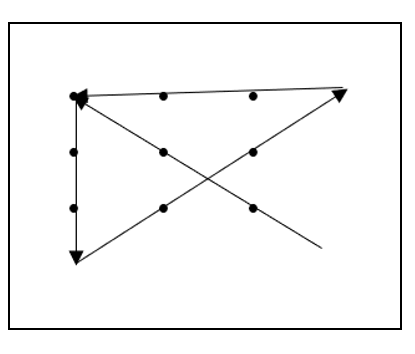
Example: Exercise on thinking out of the Box / Nine Dots’ Exercise

Right below the above slide you can show a slide with the solution.


  • Slides can be used to make the trainees “read a quote”.
  • Some portions of some judgments can be displayed on the slide. Where the reading material is lengthy trainer has to allow sufficient time to the trainees to read the same and understand the same.

To be avoided

1. Being controlled by the power point

Often many trainers start their presentation with the power point and allow the power point to control them.  We have seen some trainers being unable to continue their session when the file format on the trainer’s pen drive did not match with the software in the system provided in the training venue.
Some could not continue and refused to continue the session when suddenly the power supply failed.
Some trainers feel very nervous if the technical support to use the power point presentation fails for any reason/s.

“Content knowledge should be in the heart and mind of a trainer”.


2. Reading word by word from the slides

Some trainers collect all the material on a given subject/topic. Load them on the slides. project them. Start reading them word by word. Occasionally, they translate the material on the slides in vernacular language. Such performance makes the trainer lose his/her credibility.   

Example

A trainer was just reading word by word from the slide and occasionally translating one or two sentences in vernacular language. Each session was about an hour and half.  After two sessions on two continuous days, the trainees gave their frank feedback that “said trainer need not take any further sessions. If the trainer sends the material by mail, they can read it on their own”.

Some trainees boldly told the trainer, “We can get all these materials from google. We do not need you”

Trainer is not a sender of material from one source to another.


3. Loading the slide with information not understood by the trainer

Some trainers collect information from several sources and load the same on the slides without understanding the same. When a trainee asks what a particular terminology means they remain clueless. Before preparing the slide, trainer has to clearly understand the content he/she is intending to project through the slides.

Example  

A trainer had got about 40 overloaded slides prepared on the topic of negotiation and bargaining. A trainee asked a question “what do you mean by “ZERO SUM GAME”? The trainer was unable to explain.

“Think before you over ink” is the golden rule.


4. Using information which is not relevant to the given training

Trainer has to assess the need of the trainees.  The objective of the training has to be well understood by the trainer. Enthusiasm to overload the trainees with unwanted or unnecessary information has to be curtailed.

Example

A trainer had used the words “Game Theory in Negotiation” in a training program. When a trainee asked what does it mean, trainer was stammering, as the trainer had not internalized the concept of Game Theory. But another trainee stood up and explained the concept very well.

“You cannot make others understand that which you have not understood”


(All copy rights reserved by the author S.Susheela)

Week 11: Taking Inventory

Taking an inventory means to take stock. In the context of training it means to assess a situation.

At the end of a day’s session and at the end of the entire training program each trainer has to compulsorily take stock of the situation.

  1. Personal Inventory
    This refers to a process where a trainer assesses his/her performance at the end of the day/and at the end of the entire training program. It is a process of self assessment.
  2. External Inventory
    This refers to a process where the lead trainer or the co-trainer/s assess the quality of the training given by the trainer.

Steps to be followed

“A followed by S S C “

A – Stands for – Appreciation

S – Stop doing

S – Start doing 

C – Continue doing

In case of Personal Inventory:

Step-1: A – APPRECIATION:

Trainer has to identify and note down all the positive aspects of his/her training session, and appreciate himself or herself for the same.  

Followed by

Step 2: S – STOP DOING:

Trainer should identify what was/were the mistake/s committed by him/her and note down the same. He/she should take precaution not to do the same. He/she should give a strong signal to himself/herself never to do it again.

Step-3: S – START DOING:

Trainer should identify
(a) the mistake/s committed by him/her and note down the same.
(b) identify what must be done by him/her in future in order to stop committing the mistakes.
(c) He/she should take steps towards enhancing the quality of the training.

Step-4: C – CONTINUE DOING:  

(a) Trainer has to identify the measures to be taken to avoid doing the mistakes, and continue to follow the same till he/she has completely stopped doing said mistakes.
(b) Trainer has to continue to do all the positive things which has been noted down by him/her in the first step/A-Appreciation.

In case of External Inventory:

Step-1: A – APPRECIATION:

At the end of the session, Lead Trainer or Co-trainer/s or any other/s may l give fair appreciation to the trainer.

Step-2: S – STOP DOING:

The Lead Trainer/Co-trainer or others may indicate the trainer what he/she should not be doing and/or stop doing.

Step-3: S – START DOING:

The Lead Trainer/Co-trainer or others may indicate the trainer what he/she should start doing. They may suggest the remedy to the trainer.

Step-4: C – CONTINUE DOING:

The Lead Trainer/Co-trainer or others may monitor the trainer until the trainer corrects himself/herself.

EXAMPLE

A trainer who had extreme content knowledge coupled with command over language was always looking down and expressing his thoughts one after the other in a systematic manner. He was never looking at the audience throughout his session.

Lead Trainer told the following to said trainer as per the A-SSC method

Step-1: A – Appreciation: “Mr. X, your session was very good. You have excellent command over the subject and language. Congratulations.”

Step-2: S – Stop Doing: “Mr.X, it would be wonderful if you stop looking down throughout your session. It would be better to avoid talking to the carpet.”

Step-3: S – Start Doing: “Mr.X, I would suggest it would be better if you develop eye contact with the audience. It would be wonderful if you look forward and speak. Start doing it from the next session.”

Step-4: C – Continue doing: “Mr.X, start practicing it from today itself. Continue this practice until you master it, and overcome your habit of looking down while speaking.”

Post this External inventory, the sensitive trainer started working on himself. He also started taking personal inventory on this. As of today, he has totally stopped looking down throughout the session as he used to do earlier.


(All rights reserved by the author S.Susheela)
Week 10: Commitment

Trainer’s profession is a chosen profession. Most of the times it is a choice driven by passion. Some may get into this out of curiosity, or by compulsion. A simple thought “If others can do it, why not me?” may attract some trainers. Delusions may not take a professional forward.

Some may choose, and continue to be a trainer considering it as an additional post or as a feather in the cap. Reasons may be different, but having chosen to be a trainer one needs to stand committed to it. A trainer has to often ask, “Do I deserve to be a trainer? What more is required to be done by me?”

“Duty is the debt you owe to yourself to fulfill obligations you have assumed voluntarily.”

Science Fiction writer Robert A. Heinlien has said it so well.

Baby Steps Towards Success

I. BEHIND THE SCREEN STEPS.

  1. Choose a single topic.
  2. Collect all information /study materials related to that topic and put them in one folder.
  3. Make notes.
  4. Identify exercises, stories, case histories, pictures, videos, quotes, examples etc. related to that topic., and write down in your notes.
  5. Premeditate.
  6. Make a list of questions to be put to the trainees.
  7. Make a list of probable questions from the trainees.
  8. Be prepared to answer the questions.

II. VISITING STEP 1   

Divide the topic into two heads:
Theoretical Part and Practical part.

Take out inputs from the FIRST STEP and appropriately use them in the theoretical part and practical part.

 III. REVISITING STEP 1 & 2

Prepare a small palm chart using step 1 and 2, allocating time for each segment.

(For more clarity on this refer to the earlier blog post on SEGMENTATION)    

“Subject-Knowledge and Time are the CAPITALS for a trainer.”


(All copyrights reserved by the Author S.Susheela)

Week 9: Remembering Huxley

The desire to give an excellent presentation is quite natural.

The trainer will be at his/her best, the day on which this desire moves away from him/her naturally.  Every presentation by the trainer will be the best if the process has got woven so well into the very personality of the trainer. The desire to excel often disturbs actions and performance. On the training floor the trainer must keep in mind only what needs to be done in the present. To be free from “Performance pressure” is a quality to be inculcated by a trainer. Anxiety for the future, anxiety for the result of presentation brings down the level of excellence in a trainer. To overcome this disaster a trainer can replace the desire to give the best presentation with the following:

  1. Desire to acquire more knowledge about the specific topics.
  2. Desire to work hard on all the 4 quarters of good presentation, namely (a) Contents (b) Segmentation (c) Time management (d) Presentation skills.
  3. Desire to practice /rehearse

Coupled with sincere, planned, and appropriate action on (1), (2) and (3).

A good presentation is the effect of the trainer’s discipline in meticulously working on all the four quarters of presentation. Anything constructive needs discipline.

English biologist and educator Thomas Henry Huxley said,

“Make up your mind to act decidedly and take the consequences. No good is ever done in this world by hesitation”.

It is again, Thomas Huxley who said,

“The most valuable of all education is the ability to make yourself do the thing you have to do, when it has to be done, whether you like it or not. It is the first lesson that ought to be learned and however early a man’s training begins, it is probably the last lesson that he learns thoroughly.”

Going by Huxley who said,

“Try to learn something about everything and everything about something”

Any trainer at the beginning of one’s career as a trainer has to learn something about everything related to training. As the days go by, every trainer has to constantly try to learn everything about something which is part of the training curriculum and the training process.

Unfortunately, many of us stop at ‘learning something about something’ and leave it at that. Let us remember Huxley once more who said,

“The rung of a ladder was never meant to rest upon, but only to hold a man’s foot long enough to enable him to put the other somewhat higher.”

Let us not take rest!!!!


(All copy rights reserved by the Author S.Susheela)

Week 8: Essentials for Planning a Training Session

Subject Knowledge 

First principle is “KNOW THE SUBJECT”.

One cannot make others understand that which one has not understood.

Audiences’ Knowledge 

Trainer has to go through the bio-data or background of the participants/trainees in advance.

The trainer’s dress, language to be used for communication, the pace in which topics are to be introduced, choice of ice breakers and exercises to be given, contents in role plays, mode of giving feed back, types of questions to be asked, time that may be taken to understand technical concepts etc. are all dependent on trainer’s understanding of the audience. Where the trainer does not get any input on these before structuring the session, within the first few minutes of the session, the trainer should have the capacity to structure the session, on the training floor, suitable to and acceptable by  the trainees.

Expectation from the trainees

Depending on the availability of time, the trainer has to allocate some time to understand the expectation of the trainees. 

At times, the trainer may have to do a guess work.

Where it is advanced training, and the training schedule is provided well in advance, it is also advisable to prepare a questionnaire and find out from the participants/trainees about their expectations from each of the sessions.

At times trainer has to proceed with the assumption of expectations from the trainees and take their acknowledgment.

Example

Today’s topic is CONFLICT.

In this session, most of you may be expecting to know more about ‘what is conflict, its source, how do we manage, handle and/or resolve conflict etc.’ You may also be expecting to know some practical tips to manage and resolve conflicts.

Methodology

Trainer has to identify which of the following methods would be adapted, and when:

  • Lecture
  • Interaction
  • Role play
  • Simulation exercise
  • Story-telling
  • Examples
  • Questions
  • Case history
  • Group discussion
  • Slide show
  • Skits
  • A combination of one or more methods. 

Evaluation

  • Quick review from the participants after every topic is covered.
  • Final review at the end of the session.
  • Through Feedback forms.
  • Evaluation by the co-trainers and observers.
  • Self-evaluation.

Every trainer has to prepare separate set of feedback forms for each session. 

Advantage of Quick Review

It gives confidence to the trainer that the trainees/participants are moving along with the trainer and they are not lagging behind. It is one of the techniques to take the trainees along with the trainer.

It gives a feeling of satisfaction to the trainees that the trainer is concerned about helping them understand the subject. They feel happy and demonstrate seriousness in learning when they know that their views matter.

Example

Trainer:  I explained to you the difference between negotiation and bargaining. I gave you some examples. Have you all understood?

Kindly let me know if anyone has not understood.

Advantage of Final Review

Final review helps the trainer understand whether the participants have understood the concept clearly.

It helps the trainer to bring a synergy between the theoretical and practical knowledge.

It helps the trainer to know the level of understanding of the participants.

Caution: While taking final review, trainer has to identify a suitable person capable of giving proper review.

At times trainer can request a co-trainer also to do this.

Example

Trainer: I explained to you the difference between negotiation and bargaining. I gave you some examples.

Can anyone give me an example of what is negotiation and what is bargaining taking the example of a tenant and a landlord?

Maintaining a personal file

Trainers must keep a personal file with notes on training techniques and skills used by them and other trainers in the past and their individual feedback. They must also make a note of difficulties faced by them or other trainers in adapting a given technique. They must also note the advantage of using a particular technique to bring clarity.


(All copy rights reserved by the author S. Susheela)

Week 7: Knowledge Base

A Trainer’s field of knowledge has two dimensions:

  1. Field that is already explored
  2. Field that is yet to be explored.

A person with least knowledge can put up an act of a knowledgeable person.

A Trainer cannot be pretentious. The Trainer has to demonstrate true knowledge which naturally gets acknowledged by the trainees.

How does a trainer acquire the knowledge base?

Step 1: Assess where you are (“Field that is already explored”)

Step 2: Decide where you want to be (“Field that is yet to be explored”).

Step 3: To move from step 1 to step 2, prepare a list of things to be done.

Step 4:  Follow the list meticulously.

Step 5: Evaluate – Identify whether some of the areas that were in the list of “yet to be explored” have fallen to the list of “already explored”.

Step 6: Cross check with peers or external evaluators.  

If you are shown to be on the negative track, start the exercise all over again.

Every trainer is a constant learner.

What are the Stages prompting a trainer towards advanced learning?

Stage 1: Stage of confusion

Trainer may start questioning “I think I know so much about this topic. But do I really know what is required to be known by a trainer?”

Stage 2: Continuation of confusion

“I know many things. But all that I know may not be enough. I have to learn many things. But I can efficiently manage with what I know”.

Stage 3: Stage of Clarity

“I am sure that I don’t know _____, _____ and ______ in this field. I have to work hard to learn. I should move on to the unexplored field.”   

Unfortunately, many trainers stay in second stage and stop working on themselves. Movement from the second to the third stage is a step towards progress.

Despite having come to the third stage, a trainer who does not put in appropriate effort, will not achieve excellence. 

What prevents a trainer from learning?

Many try to pretend to be who they are not. They are dependent on what others think of them. They care too much for others’ opinions and rely upon it. Unfortunately, many do not give true feedback. Many a times, feedback is also given with ignorance.  If trainers constantly get false feedback from many that they are good/very good or excellent trainers, they may go back to the second stage and decide to stay comfortably in that stage.

How does a trainer overcome this trap?

  1. Move with successful people in the field of training who have mastered the art of training and observe them critically.
  2. Move with those who are less capable than yourself.
  3. Do not forget your journey on the bridge starting from the field of explored to that of unexplored is a continuous journey until you retire from being a trainer. 

The more you learn, the more concepts that are yet to be learnt, get explored. You learn that the “Field of yet to be explored” is always greater than the “field of already explored”.   

(All copy rights reserved by the author S.Susheela.)

Design a site like this with WordPress.com
Get started